
Public Building VPL
Commercial vertical platform lift options for offices, churches, schools, retail spaces, and shared-use buildings.
When stairs limit access to a public building or common area, a vertical platform lift can provide a compact access solution where a ramp is not practical or would take up too much space.
Key Features:
Key Features:
- Vertical platform lifts carry a wheelchair user or person with limited mobility between two levels on a stable platform, providing direct access where stairs are difficult to use and a long ramp is not practical.
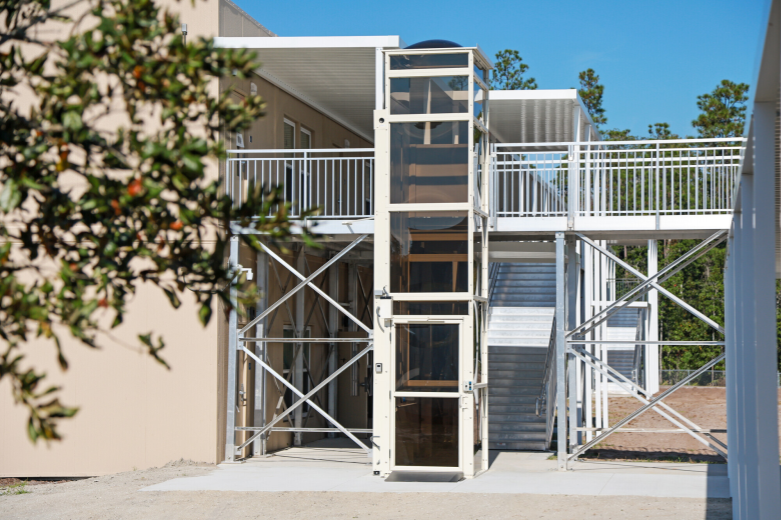
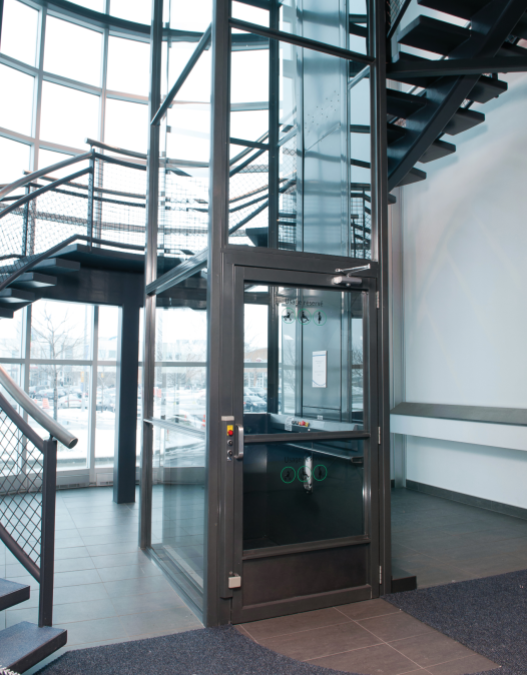
- They can be installed at offices, churches, schools, retail spaces, community buildings, and other public facilities and are available in open, factory-enclosed, and site-built shaftway configurations.
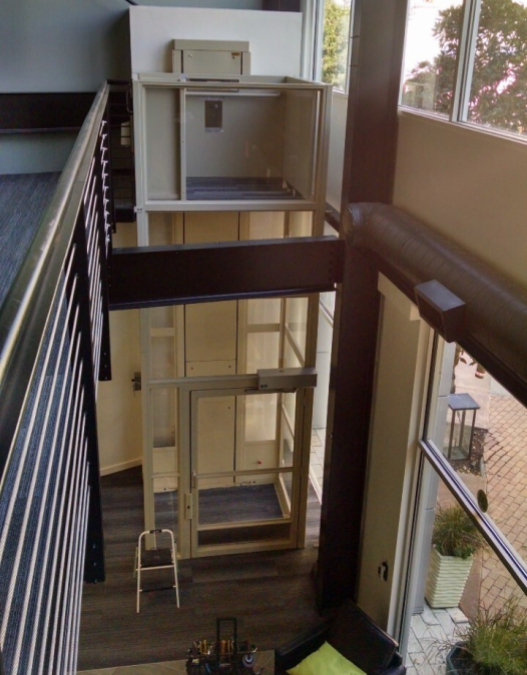
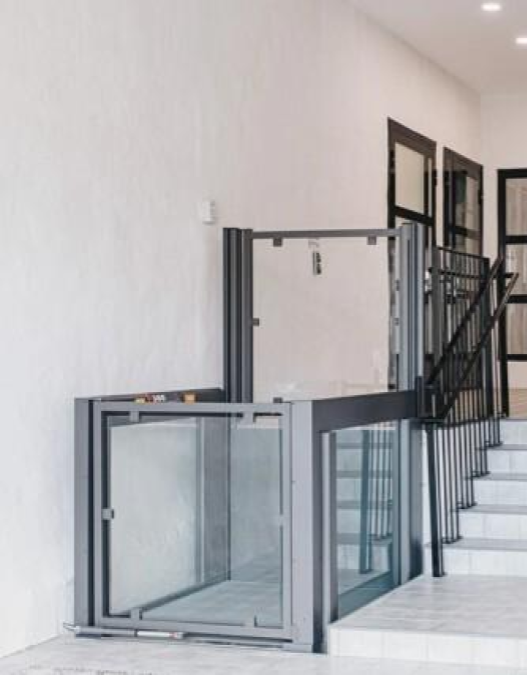
- Available in three primary configurations: open VPL, enclosed VPL, and shaftway/hoistway VPL depending on rise and available space
- Suitable for indoor or outdoor installation, depending on the model and options selected
- Can often be added to an existing public or commercial building
- Commonly used at building entrances, stages, raised platforms, split-level interiors, and other elevation changes
- Multiple platform sizes and entry/exit configurations are available
- Weather protection and battery backup options are available on many models
- Enclosed models provide additional weather protection and reduce the need for some site-built guarding
- Shaftway models can be integrated into new construction, additions, or major renovations
- Commercial applications may require additional controls, signage, emergency features, permits, and inspections
- Lifting height, platform size, capacity, and available options vary by model
Brands & Models We Offer
Installation Time
Pricing Details
READY TO GET STARTED?
You don't have to navigate this alone.
Whether you're just starting to think about mobility solutions or you're ready to explore specific options, we're here to help.
Contact us now for your free consultation and fill out our simple online form.
We'll listen to your concerns, answer your questions, and help you understand your options—all in the comfort of your own home, with no pressure and no obligation.
Your independence is worth protecting. Let us show you how.

Quick answers to commonly asked questions.
Can a VPL be used as part of an accessible route?
A properly selected and installed VPL may be used to provide an accessible route in many existing and new-building applications. The building use, project scope, applicable accessibility standards, and local code requirements must be reviewed.
Are commercial VPLs different from residential lifts?
Commercial and public-building applications require different equipment ratings, controls, gates or doors, enclosures, platform sizes, signage, emergency features, and code approvals. A residential configuration is not suitable for a public building.
Does the project require an architect or engineer?
Some projects can be completed without extensive design services, while others require architectural drawings, structural details, engineered foundations, or coordination with the building’s design professional. This depends on the scope and local requirements.
What site work is commonly required?
Common site work includes a concrete foundation, upper landing modifications, gates or doors, guarding, electrical service, drainage improvements, bollards or barriers, weather protection, and restoration of surrounding finishes.
Can a VPL be installed outdoors?
Yes. Outdoor commercial installations require careful planning for drainage, weather exposure, roof runoff, snow and ice where applicable, corrosion protection, and safe public circulation around the lift.
How long does a commercial VPL project take?
Timing depends on equipment availability, design, approvals, permitting, site preparation, and inspection scheduling. The project timeline should be established after the site and jurisdictional requirements are reviewed.
Are permits and inspections required?
Public-building applications commonly require permit review, inspection, and coordination with local authorities.
What power is required?
Power requirements vary by product and configuration. Many vertical platform lifts use 120V AC, and some options include battery backup.